

The Sixth Sunday of Easter, May 10, 2026
The Sixth Sunday of Easter, May 10, 2026
The Narrative Lectionary – NL444
Philippians 1:18A–(Luke 9:46-48)
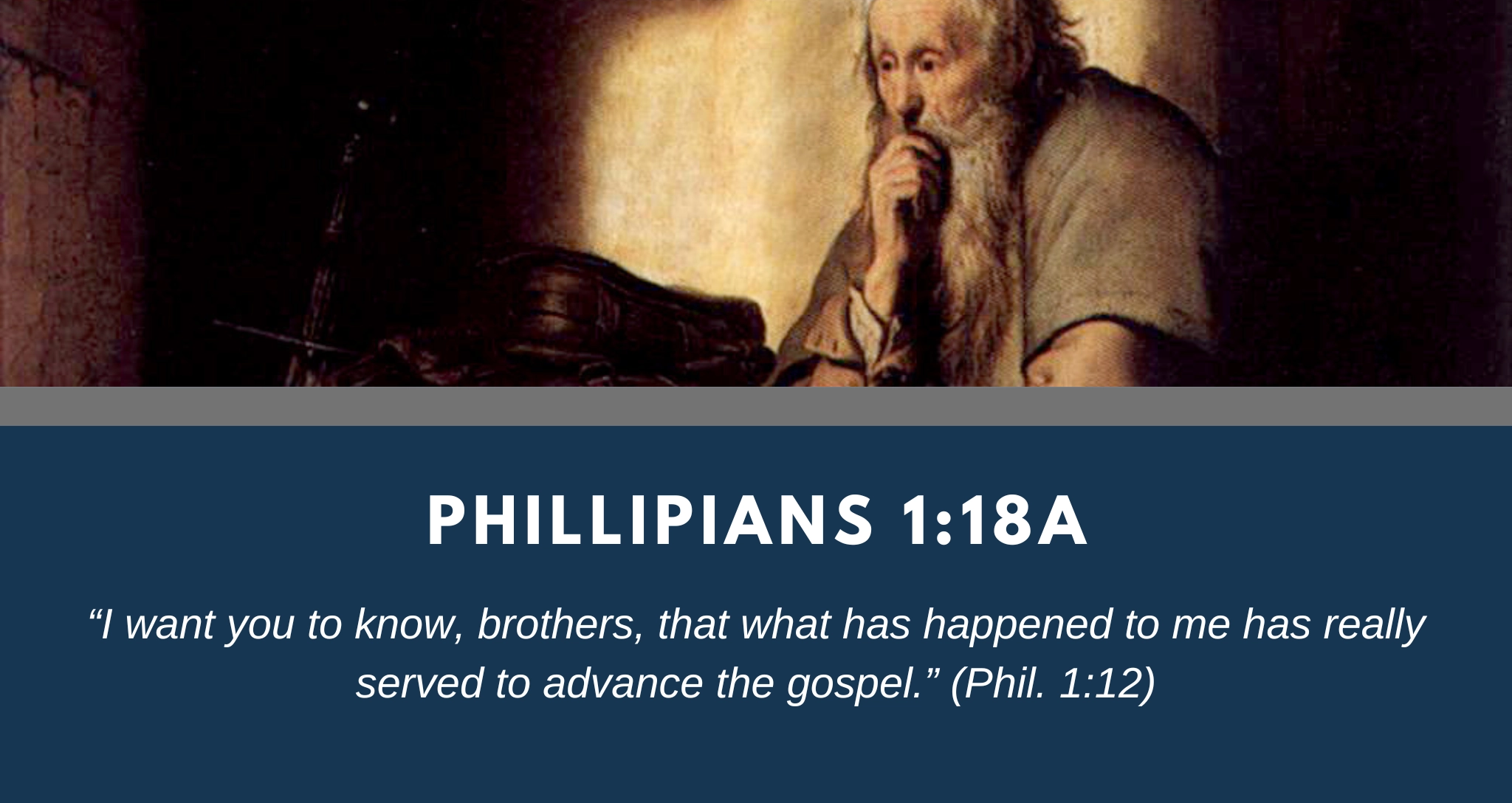
Paul in prison, thankful for the Philippians’ partnership in the gospel.
“I want you to know, brothers, that what has happened to me has really served to advance the gospel,” (Phil. 1:12)
Paul, chained in a Roman prison, writes to the saints at Philippi. He greets them in grace and peace… He thanks God for their partnership in the gospel… He declares his confidence that the One who began a good work in them will complete it on the day of Christ (vv. 1-11). Then he stands the notion of suffering on its head. His imprisonment has not hindered the spread of the gospel but has actually advanced it. Others have been emboldened to preach. Some, though, preach from envy and rivalry (vv. 12-18a). Paul does not present this as a success story of human resilience or a church-growth strategy. Rather, the hidden God works here, exposing as sinners those who would measure ministry by results, sincerity, or comfort. The gospel advances not because of Paul’s eloquence or the Philippians’ zeal, but despite—indeed, through—imprisonment, rivalry, and the old Adam’s ambition.
Luther’s three rules (Oratio = Prayer; Meditatio = Word; Tentatio = Struggle) help us hear these words so that we come to stand under their authority and the Word of God has its way with us. First, Prayer. We fall to our knees before a text that will not let us stand. We pray, “Holy Spirit, come, and kill every pious illusion that we can read this letter as self-help for suffering saints.” Without prayer, we sinners will turn Paul’s chains into a motivational poster. Only the Spirit who inspired these words keeps us from domesticating the scandal: God uses locked doors, jealous preachers, and broken bodies to proclaim Christ. Prayer drags us into the same posture Paul assumed—helpless yet firmly held.
Second, Word. These words will have their way with us. Our passion is to be done in by them. “He who began a good work in you will bring it to completion” (v. 6) is pure monergism; the saints do not finish what God started… God alone does. Paul’s imprisonment “has really served to advance the gospel” (v. 12). The gospel in its purity insists the kingdom comes where it looks most dead. Even the rivals preaching “from envy and rivalry” (v. 15) cannot stop it. The gospel is not a fragile message dependent on the preacher’s pure motives; it is the power of God that works extra nos—that is, from outside of us. Salvation comes entirely from God and not from human works or merit. Paul does not wring his hands over bad actors. He rejoices because Christ is proclaimed. Here, law and gospel are at work: the law exposes every self-seeking motive in ministry; the gospel declares that Christ is preached anyway, and that is enough. Paul’s letter to the Philippians is saturated with joy precisely where the old Adam expects despair.
Third, Struggle. The text now attacks us with Anfechtung—that is, it pierces through whatever defenses we have erected against the God who works despite us. Modern ministry measures success by attendance, podcast downloads, and sincere motives. When we have erected our own prison walls—that is, the “imprisonments” of failure, criticism, rival congregations thriving for all the wrong reasons—the devil whispers that the gospel is stalled. And the questions assail us: “If even Paul’s opponents advance the gospel, why am I so impotent and ineffective?” This piercing assault drives us back to prayer and meditation until the Holy Spirit opens our ears once again, and the promise breaks through: God completes what he begins. Christ is preached… Jesus Christ, him crucified and him alone, handed over to be the life of dead sinners.
Jesus Christ is for you… for sinners. Jesus “for you” is not limited to the successful pastor… not limited to the sincere believer… not limited to the impressive-looking ministry… Jesus Christ is for you… You, the chained, the envious, the one whose best efforts still bear the stench of envy and rivalry. The one who began the good work in you hung dead on a cross; the verdict has already been pronounced upon you: dead in your sin but alive in Christ. In him, your chains become the advance of the gospel, your rivals become irrelevant, and your joy becomes unkillable. Repent of every glory-seeking scorecard and hear this: by hook or by crook, Christ is preached… and he is preached for you.
Table Talk: Discuss how Luther’s Three Rules: Prayer, Word, and Struggle, are at work in your hearing of this text.
Pray: Father in heaven, use these words of yours to have your way with me that I may trust you to bring to completion what was begun at my baptism—the new life in Jesus Christ. For his sake, hear my prayer. Amen